Objective: Identify linking opportunities of Salvadoran Diaspora communities with their home country.
Objetivo: Identificar oportunidades de vinculación de la Diáspora Salvadoreña con su pais de orígen.

Saturday, April 24, 2010

Español: Principios básicos de una red de contactos

Nunca me vi a mi mismo como un experto en conectar gente. Los que me conocen bien saben que yo soy más bien una persona callada y que no soy el más elocuente hablador. Bueno, sorpréndanse! Este proyecto me tiene hablando bastante, conociendo mucha gente y también haciendo contactos entre personas.

El resultado final de mi experiencia será un reporte de éxitos y lecciones a aprender de la cooperación entre la diáspora salvadoreña y el país. Para obtener esta información tengo que entrevistar organizaciones y gente que han tenido experiencia en esta cooperación o gente que está haciendo proyectos de desarrollo y que pueden tener potencial de cooperación en el futuro. Como se lo pueden imaginar en este momento, tengo que conocer muchas personas, obtener información de ellas y al final conectar gente con intereses similares para que una cooperación sea posible en el futuro.

De los consejos que he recibido para hacer una red de contactos, hay dos que han sido particularmente útiles durante mi estadía en El Salvador. El primero es tener una historia de 30 segundos acerca de mí. Llegó de manera natural tan pronto como empecé a conocer gente. Tengo que decirles quien soy yo y cuál es el motivo de mi visita. La gente aquí es bastante abierta a los extraños y eso me ha ayudado mucho. Al principio pensé que tendría que acostumbrarme al rechazo, pero la realidad ha sido diferente. El segundo consejo es que interesarse en lo que hace la gente es la mejor manera de hacer una red de contactos. Para conectar personas uno tiene que saber qué hacen y cuáles son sus intereses (gracias Rick). La gente se conecta porque comparten intereses bien sea en lo personal o en lo profesional.

Aplicando estos dos principios básicos de cómo crear una red de contactos espero que este proyecto sea exitoso. Les contaré al final de junio.

English: Networking 101

I never saw myself as a networker. People who know me well know also that I am rather quiet and not an outstanding talker. Well, be surprised. This project has me talking a lot, meeting a lot of people and also networking.

The final result of my experience will be a report about the experiences of success and lessons to learn from cooperation between the Salvadoran diaspora and the country. For getting that information I have to interview organizations and people who have either experienced that kind of cooperation or who are doing developing projects that can be potential for a future cooperation. As you can imagine at this point, I have to meet a lot of people, get information from them, and at the end of the day, connect people with similar interest to make cooperation possible in the future.

From the networking tips I have received in the past, there are two that have been particularly handy during my stay in El Salvador. The first is to have a 30-second story about myself; it came naturally as I started meeting new people. I have to tell them in just few seconds who I am and what the reason of my visit is. People here are very open to strangers and that helps a lot. At the beginning I thought I would have to get used to a lot rejection, but reality has been very different. The second tip is that getting interested in what people do is the best way to network. In order to connect people, one has to know what they do and what their interests are (thank you Rick). People get connected by sharing interest either personal or professional.

By applying these two basic principles of networking, I expect the project to be successful. I will tell you at the end of June.

Thursday, April 22, 2010

Español: Dos caras del desarrollo


En dos días consecutivos tuve la oportunidad de observar las muy diferentes realidades de la gente en las zonas rurales y en las ciudades de El Salvador.

El lunes acompañé a un grupo de Progreso, una organización comunitaria, a un taller para jóvenes en Copapayo, una comunidad rural de Suchitoto. El taller fue sobre la cultura de violencia y paz, y también sobre democracia. Cuando vi los materiales que tenían preparados, me parecieron muy profesionales: material pedagógico, papel, cinta, marcadores, tijeras, etc. La comunidad rural no está muy lejos del casco urbano de Suchitoto; sin embargo, el viaje tomó cerca de una hora en una carretera rural no pavimentada. Esta época del año es seca, pero me puedo imaginar que la carretera no será tan amigable cuando la época de lluvias empiece en mayo. También hay un puente que fue parcialmente destruido por un huracán hace algún tiempo. En época seca los carros pueden pasar aunque con dificultad. El problema es durante las lluvias porque el nivel del rio se incrementa dramáticamente, el agua cubre la parte dañada del puente y la gente no lo puede usar más. Tienen que utilizas canoas para cruzar el río o tomar una ruta alternativa que es bastante larga para llegar a la zona urbana más cercana.

Hubo una camioneta tipo pick-up disponible para trasportarnos. Seis personas iban en la cabina y ocho más íbamos en el platón de carga (yo fui uno de ellos). El salón de clase fue un área abierta aledaña a un edificio y el calor del día estaba insoportable. A pesar del calor y las dificultades técnicas el taller se desarrolló bien. Yo tenía una reunión en la tarde así que tuve que devolverme a Suchitoto solo. Tomé una de las dos únicas rutas de buses que van de Suchitoto a Copapayo en el día y llegué sin problemas a la zona urbana una hora más tarde.

El martes, en el otro lado de la historia, fui por primera vez a San Salvador, la capital. Tenía mis reservas por su mala reputación y los comentarios que había escuchado. Luego de un día en la ciudad, ahora tengo mucho menos reservas. Esta es una ciudad que luce moderna y con buena infraestructura, calles en buen estado, y gente que parece caminar muy relajada en las calles, al menos en las áreas donde caminé. Contrario a Suchitoto, la gente no me dijo hola en las calles. Fui a una de las áreas bonitas de la ciudad, pero sé que hay otras áreas con bastantes tensiones sociales. Como en toda gran ciudad, la vida en las áreas comunes es impersonal y el tráfico es caótico en algunos lugares. Entré a Galerías, un moderno centro comercial con tiendas de ropa de renombre internacional, una buena plaza de comidas, aire acondicionado, y todas las comodidades del mundo moderno. Fui a una tienda de café, pedí un café americano con un pastel y me sentí en un mundo completamente diferente. Entonces un grupo de religiosas se sentó en una mesa al lado de la mía y me dijeron hola. Ahí supe que aún estaba en El Salvador.

La comunidad de Copapayo y el centro Galerías están a solo unos 60 kilómetros de distancia una de la otra, pero son dos caras extremas de desarrollo: una llena de desafíos materiales, la otra llena de confort. Me siento feliz de que en ambos mundos encontré gente que aún le dice hola a los extraños.

English: Two faces of development


In two consecutive days I had the opportunity to witness the very different realities of people in rural areas and cities in El Salvador.

On Monday I accompanied a group of Progreso, a community organization, to a workshop for young people in Copapayo, a rural community of Suchitoto. The workshop was about the culture of violence and peace, and also democracy. When I saw the materials they prepared, they look very professional, with pedagogic materials, paper, tape, markers, scissors, etc. The rural community is not too far away from the urban centre of Suchitoto; however, the trip took about one hour in a small non-asphalted rural road. This time of the year weather is dry, but I can imagine that the road will not be very friendly when the rain seasons starts in May. Also, there is this bridge that was partially destroyed by a hurricane some time ago. During the dry season, cars can cross although with some difficulty. The problem is during the rains because the level of the river increases dramatically, water covers the damaged part of the bridge, and people cannot use it anymore. They have to use canoes to cross the river or take a very long way to access the closest urban area.
There was a pick-up truck available for transportation. Six people were in the cab and eight people were in the open cargo area (I was one of them). The classroom was an open area besides a building, and the heat of the day was almost unbearable. Despite of the heat and the technical difficulties the workshop went well. I had a meeting in the afternoon so I had to get back to Suchitoto by myself. I took one of the only two bus routes that go from Copapayo to Suchitoto during the day and I arrived safely to the urban area one hour later.

On Tuesday, on other side of the story, I went for the first time to San Salvador, the capital. I had my concerns because of its bad reputation and comments I heard before. After a day in the city, I am definitely less concerned. This is a modern city that looks with good infrastructure, streets in good shape, and people seem very relaxed walking on the streets, at least in the areas I walked. As oppose to Suchitoto, people did not say hello in the street. I went to the nicer part of the city, but I know there are other areas with big social issues. As any big city, life in common areas is impersonal and traffic is chaotic in some spots. I entered to Galerias Mall, a modern shopping centre with worldwide recognized fashion shops, a very nice food court, air conditioned, and all the amenities of the modern world. I went to a coffee shop, had an American-like coffee with a pie and I felt in a completely different world. Then a group of religious ladies sat in a table besides mine and said hello. At that point a new I was still in El Salvador.

The community of Copapayo and the Galerias Mall are about 60 kilometers away from each other, but these are two extremes faces of development: one full of physical challenges, the other full of physical comfort. I am glad that in both world I still found people smile and say hello to strangers.

Wednesday, April 14, 2010

Español: Visita a la planta de reciclaje


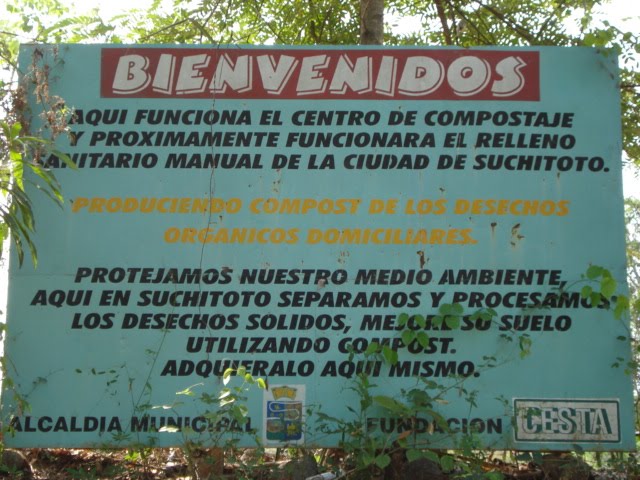
Bueno, la visita a la planta de reciclaje estaba in mi lista de cosas pendientes y ahora está hecha. El pasado martes Nery, la responsable de la oficina ambiental de Suchitoto, me llevó a un tour por la planta la cual está a unos dos kilómetros del casco urbano. Esta iniciativa comenzó como un programa voluntario hace cerca de diez años. Las personas que estaban convencidas del reciclaje pusieron un aviso en frente de sus casas para informarle a los recolectores de basura que ahí se separaba la basura en tres: material orgánico, vidrio y plástico. Los recolectores de basura recogían los contenedores en días separados y los transportaban al sitio de reciclaje. Con los años, la idea se volvió popular y se volvió una ley.

Hoy en día se requiere que toda la gente del casco urbano separe su basura y esta es manejada de diferente forma. El material orgánico es agrupado por mes, movido regularmente para permitir aireación, tamizado para asegurar un tamaño de partícula homogéneo y para eliminar contaminantes, y finalmente empacado para ser vendido a los agricultores locales. El vidrio es segregado por colores y vendido a una empresa vidriera. Y los plásticos son recolectados y vendidos a intermediarios. Los lixiviados del tratamiento de materia orgánica van a un filtro antes de ser vertidos a una quebrada.

Artículos de gran tamaño como llantas, grandes electrodomésticos, etc., son recolectados una o dos veces al año y son desmantelados, si es posible, en componentes reciclables. Los materiales no tratados y los contaminantes del tratamiento de materia orgánica son puestos en un relleno sanitario. Para responder una pregunta que alguien me hizo, los materiales peligrosos de hospitales son tratados separadamente bajo siguiendo las regulaciones de salud. Otros materiales peligrosos como baterías o similares pueden ir a relleno sanitario.

El sistema es una iniciativa muy buena. Hay oportunidades de mejoramiento, pero creo que es un excelente logro para la ciudad.

English: Visit to the recycling place


Well, visiting the recycling facility was in my to-do list, and now it is done. Last Tuesday Nery, the responsible for the Environmental Office of Suchitoto, took me to a tour of the facility which is about two kilometers away from the urban center. This initiative started as a voluntary program about ten years ago. People who were convinced of recycling put a sign in the front of their houses to tell garbage collectors that they were separating the garbage in three: organic material, glass, and plastic. The garbage collectors picked up the containers in separate days and then transported them to the recycling facility. Within years, the idea became popular and it turned into law.

Nowadays, all people in the urban area are required to separate their waste and it is treated in separate streams. Organic materials are piled up by month, moved regularly to allow aeration, filtered to ensure a homogeneous particle size and eliminate solid contaminants, and finally packaged for sale to local farmers. Glass is segregated by color and then sold to a glass making company. And plastic materials are collected and sold to intermediaries. Lixiviates from organic material treatment go to a filter before they are dumped to a small river.

Oversize items such as tires, big appliances, etc., are collected once or twice a year, and they are disassembled, if possible, into recyclable components. Non treatable materials and contaminants of the organic stream are collected in a landfill. To answer a question someone asked me, hazardous materials from hospitals are treated separately following public health rules. Other hazardous materials such as batteries or the like may go to the landfill.

The system is a good initiative. It has room for improvement, but I think it is a great achievement for the city.

Saturday, April 10, 2010

Español: Prevenir en lugar de corregir… me encanta!

Uno de los problemas que enfrentan los salvadoreños es que los jóvenes no tienen suficientes oportunidades para desarrollarse. Esto crea violencia y tensión social. El municipio de Suchitoto ha sido capaz de mantener un ambiente seguro hasta ahora. Gente de diferentes sectores están trabajando en comités para elaborar planes de mejora de la educación, inclusión en la comunidad, entretenimiento, etc. El viernes participé en una reunión comunitaria; se habló de cómo mejorar la educación para prevenir que los jóvenes dejen la escuela. Quieren trabajar junto con los directores de las escuelas para general programas y encontrar recursos. Es muy pronto para decir si las iniciativas que ellos tienen van a ser efectivas o no, pero me encantó la forma de abordarlo… “Hagamos algo ahora para prevenir los problemas en lugar de actuar luego solo para corregirlos.”

English: Prevent rather than correct… I love it!

One of the situations that Salvadorans face is that young people do not have enough opportunities for developing themselves. This creates violence and social distress. The municipality of Suchitoto, so far, has been able to maintain a safe environment. People from different sectors are working in committees to elaborate plans to improve education, community involvement, entertainment, etc. On Friday, I participated in a community meeting; it was about improving education in order to prevent youth to quit schools. They want to work with school Principals to create programs and find resources. It is early to say if the initiatives they have will be effective or not, but I love the approach… “let’s do something now to prevent problems rather than act later to just correct them.”